
Procurement · 24 November 2026 · 6 min read
PPN 006 for construction: what changed from PPN 06/21 and what your Carbon Reduction Plan needs
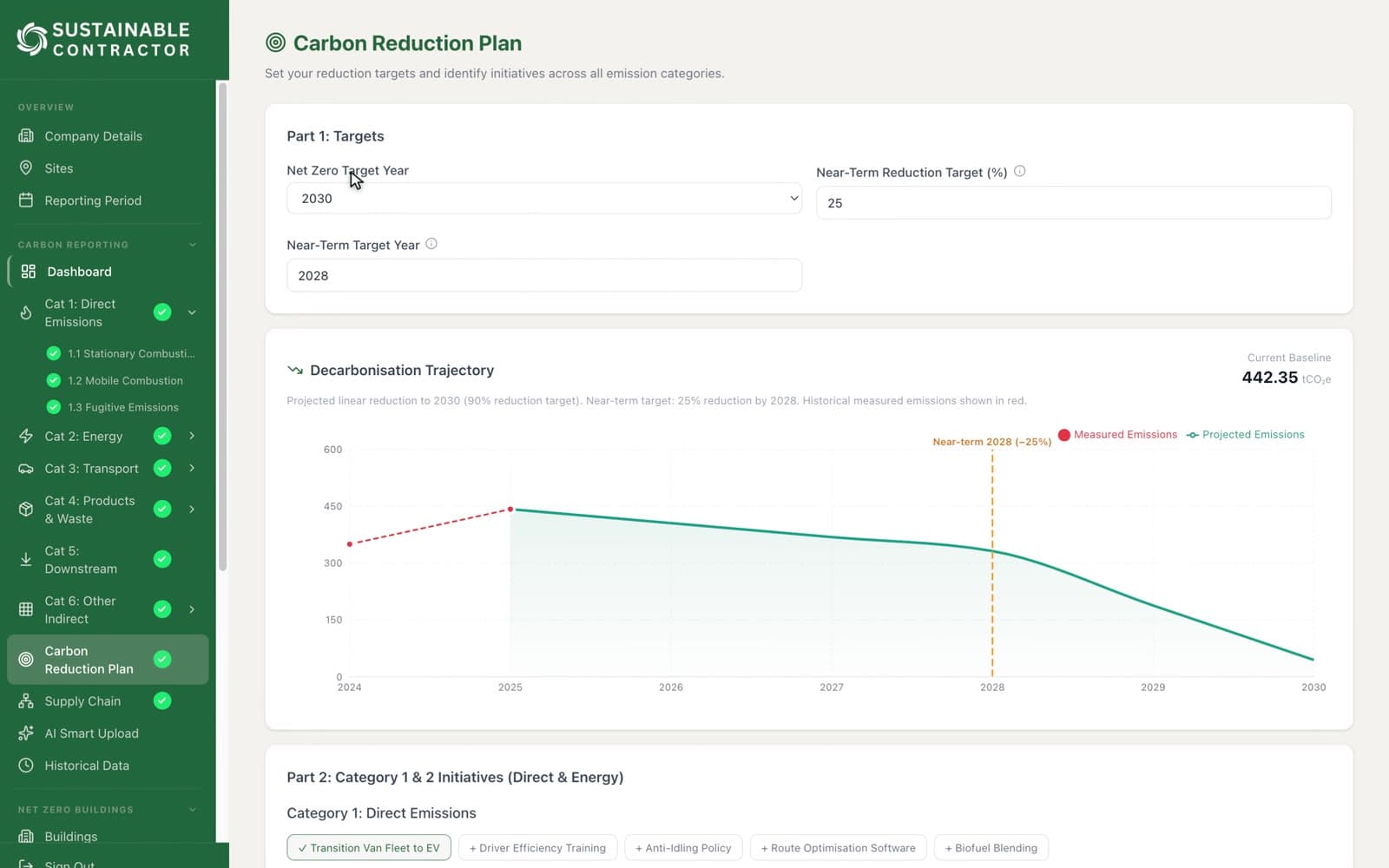
PPN 006 now governs Carbon Reduction Plans on major central government contracts. Here is what changed from PPN 06/21, which works it covers and what a compliant plan contains.
If you bid for central government works, or for frameworks that let large call-offs, you will be asked for a Carbon Reduction Plan (CRP). Since February 2025 the rule behind that request has been Procurement Policy Note (PPN) 006, not PPN 06/21. This guide is for directors, bid managers and estimators at construction firms who want to know what changed, which contracts it covers, and what a plan has to contain to pass.
If your Carbon Reduction Plan was written for PPN 06/21, most of the substance carries over. But the legal basis, some of the wording and a few practical details are different, so it is worth checking it against the new note.
What changed from PPN 06/21
PPN 006 was issued in February 2025 to sit under the Procurement Act 2023 and the Procurement Regulations 2024, which apply to procurements that started on or after 24 February 2025. The Cabinet Office last updated the guidance on 10 July 2025, adding a set of frequently asked questions. At the time of writing (November 2026) that is the latest version.
The main changes are:
- A condition of participation, not a selection criterion. Under the Act, the CRP is checked as a condition of participation. The PPN 006 FAQs say the substantive obligation is the same as under PPN 06/21. Your plan is checked against the requirements, not scored or compared with other bidders' plans.
- Older procurements still follow PPN 06/21. Procurements that started before 24 February 2025, and call-offs from frameworks set up under the old regulations, still refer to PPN 06/21. You may see both notes in tender documents for a while.
- Parent company plans have tight limits. A subsidiary can rely on its parent's CRP only if it is wholly owned, the parent's net zero commitment is stated to apply to it, the environmental measures can be applied by the subsidiary on the contract, and the plan is published on the subsidiary's own website. The note says this may only be a temporary measure, and that the bidding company should get its own plan as soon as reasonably practicable.
- Frameworks and dynamic markets. The note applies where an individual contract awarded under the framework or dynamic market is expected to be worth more than £5 million a year. Buyers may also check, before a call-off, that you are still committed to net zero.
Which contracts it covers
PPN 006 applies to central government departments, their executive agencies and non-departmental public bodies. They should apply it to contracts for goods, services or works with an estimated value above £5 million a year, including VAT, unless it would not be relevant or proportionate.
The value is averaged over the life of the contract. The note's own example is a four-year contract worth £21 million in total: that is in scope even if the first year is below £5 million. In construction, that brings in many works packages, term maintenance contracts and framework call-offs for government estates and infrastructure.
Two points that matter for the supply chain:
- Subcontractors don't need a CRP under PPN 006. The FAQs say a plan is required from the organisation that will sign the contract. A subcontractor only needs one where it is bidding for an in-scope contract in its own right. In practice, main contractors often ask their supply chain for carbon data anyway, because subcontracted work sits in their own Scope 3.
- Devolved administrations. The FAQs say PPN 006 is not stated to be mandatory for the devolved administrations. Public buyers in Scotland, Wales and Northern Ireland may use their own rules, so read each tender's documents.
What a compliant Carbon Reduction Plan contains
The plan must follow the template in the PPN and the PPN 006 technical standard. The FAQs say a corporate social responsibility statement or case studies can't be accepted instead. A compliant plan has:
- 1.A commitment to net zero by 2050 at the latest for your UK operations.
- 2.Baseline emissions: a baseline year with Scope 1, Scope 2 and the included Scope 3 sources, in tonnes of carbon dioxide equivalent (tCO2e). If you have never measured before, your first reporting year can be your baseline.
- 3.Current emissions for the latest reporting year, using the same reporting period throughout.
- 4.Reduction targets , including a projection of emissions over the next five years.
- 5.Carbon reduction projects: measures you have completed since the baseline, which will be in effect on the contract, and those you plan.
- 6.A declaration and sign-off confirming the plan follows PPN 006 and the Greenhouse Gas (GHG) Protocol Corporate Standard and uses the UK Government conversion factors, approved by the board (or the members of a limited liability partnership) and signed by a named director, with their job title and the date.
Which emissions to include
All UK Scope 1 and Scope 2 emissions, plus five Scope 3 categories from the GHG Protocol Scope 3 Standard. For a contractor, they typically look like this:
- Scope 1: diesel, red diesel or HVO (hydrotreated vegetable oil) in site plant and generators, fuel in company-owned vans and cars, gas for heating offices and yards, and refrigerant losses from air conditioning.
- Scope 2: electricity you buy for offices, depots and site cabins on a supply in your name.
- Category 4, upstream transport and distribution: hauliers and couriers you pay to deliver materials and plant, including moving things between your own sites.
- Category 5, waste generated in operations: skips, muck-away and other waste treated by waste contractors.
- Category 6, business travel: hire cars, rail, flights and hotels, and staff using their own cars for work.
- Category 7, employee commuting: staff travelling between home and site or office.
- Category 9, downstream transport and distribution: transport of products you sell, where you don't pay for it. For most contractors this is small or nil, but state that.
Purchased materials such as concrete and steel, and the work of your subcontractors, are not in the required subset. You can report them, but the plan doesn't need them to pass.
The plan covers the bidding organisation, not just the contract. Report all seven Kyoto Protocol greenhouse gases as tCO2e, and choose a boundary (operational control, financial control or equity share) in line with the GHG Protocol. The technical standard does not require your footprint to be audited.
Publishing and keeping it current
- Publish it on your UK website , with a link in a prominent place on your homepage. Keeping previous plans online is described as good practice. If you have no website, you must provide a written copy to anyone who asks within 30 days.
- Update it at least annually , within six months of your financial year-end. The FAQs describe a plan as valid for 12 months, and one plan can be used for every in-scope bid in that time.
- Plans are checked, not scored. The FAQs say buyers check that a plan meets the requirements, and don't score plans or compare them with other bidders'. If your footprint went up, for example because you won more work or bought another business, explain why in the plan.
What to do next
- 1.Check whether your current plan still names PPN 06/21. If you are bidding for procurements that started after 24 February 2025, update the declaration to PPN 006.
- 2.Confirm your reporting year and collect a year of fuel cards, plant and generator fuel records, electricity and gas bills, haulier invoices, waste transfer notes and travel expenses.
- 3.Calculate Scope 1, Scope 2 and the five Scope 3 categories using the UK Government conversion factors for the right year.
- 4.Set a target and a five-year projection, and list the measures you will actually use on site, such as HVO in generators, battery plant or hybrid welfare units.
- 5.Get board approval, a named director's sign-off and the date, then put the link on your homepage.
- 6.Diary the next update for within six months of your next financial year-end.
Our platform builds PPN 006 Carbon Reduction Plans from your fuel, energy, waste and travel data and downloads them as PDF. To see it working on your own figures, book a demo.
This article is general guidance, not legal advice. Check the PPN 006 documents and each tender's instructions for your own situation.
Put this into practice.
See how the platform turns your invoices into a PPN 006-ready Carbon Reduction Plan.
Book a demo